


Contract manufacturing: Secure flexible manufacturing capacities with the right manufacturing partner
Today's industrial companies that want to remain competitive must deliver quickly, guarantee consistently high quality, and keep costs under control. This is precisely where Keller Feinwerktechnik comes in: as a reliable partner to bridge bottlenecks, manage production peaks, or outsource entire manufacturing processes.
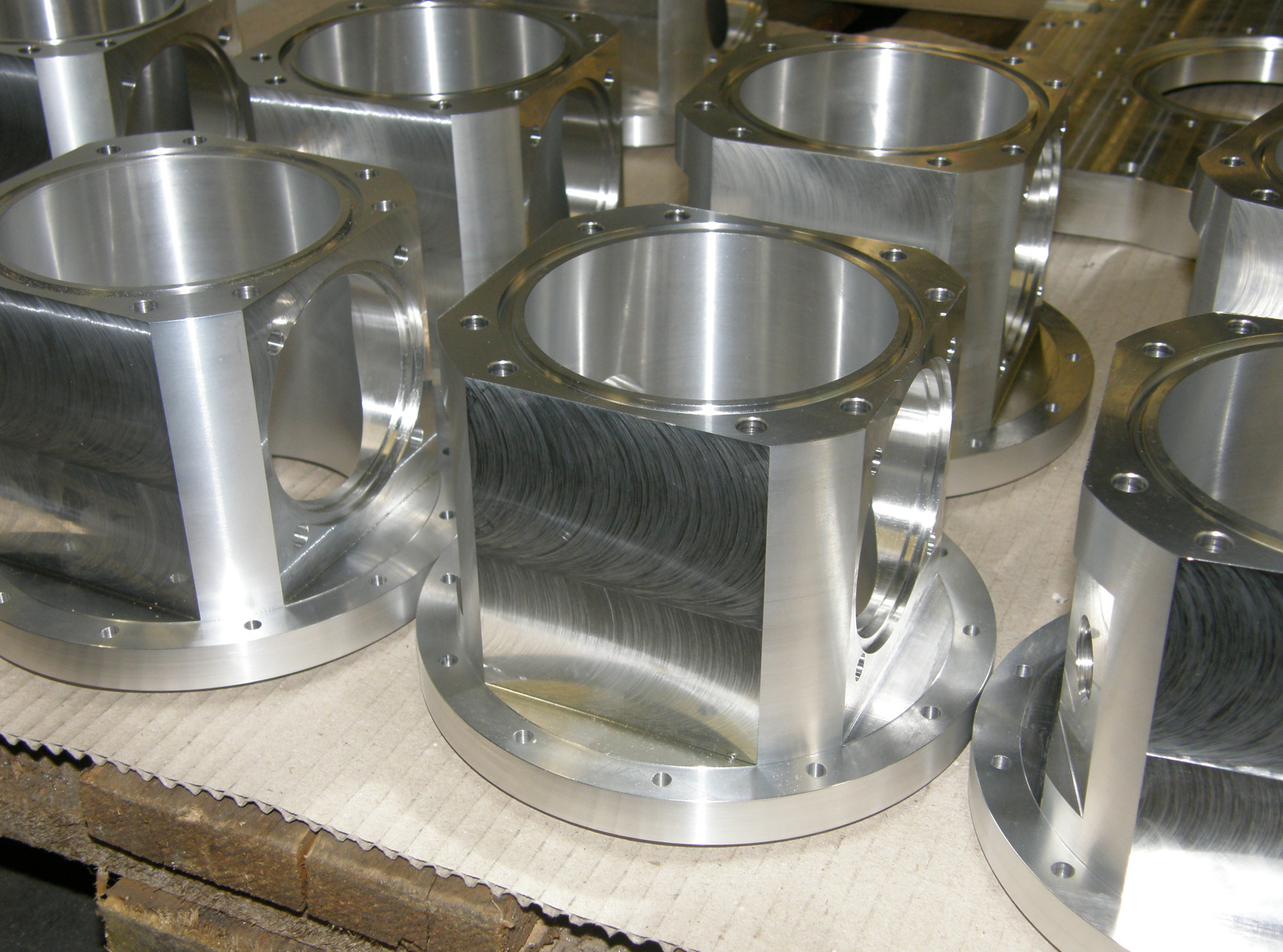
With a machine park consisting of approximately 20 turning and milling machines from Mori Seiki and DMG, we can process your requests quickly and precisely.
Why companies rely on our manufacturing
The search intent of many companies is clear: they want to outsource manufacturing services without risk and with a reliable partner. The advantages of contract manufacturing are particularly evident in these points:
More capacity without investment: You expand your production without having to build up machinery or staff.
Predictability and adherence to deadlines: An experienced manufacturing partner like Keller Feinwerktechnik can reliably map processes and guarantee delivery dates.
Cost control: Fixed costs become variable costs. You pay for parts and services actually produced.
Faster implementation: In times of time pressure or project peaks, external manufacturing can significantly shorten the time-to-market.
Access to specialized know-how: We bring experience, measurement and testing technology as well as established processes.
Focus on core competencies: Development, sales and assembly of your core products remain in-house - execution is handled by professionals.
Especially in industries with a high degree of product variety or fluctuating capacity utilization, contract manufacturing is a strategic lever to remain flexible while simultaneously ensuring quality.

Services in contract manufacturing
Contract manufacturing is as diverse as industrial production itself. Typical services include:


Request a quote for contract manufacturing now -
fast, transparent and reliable
Are you looking to outsource production capacity, bridge short-term bottlenecks, or establish a long-term partner for contract manufacturing and CNC manufacturing? Then talk to us. We support you from the initial inquiry to series production, with clear processes, high quality, and predictable delivery.
Use our contact form now, send us your drawings or technical requirements and we will get back to you promptly with a suitable solution and a transparent offer.

An Overview of Our Services











Request a free consultation now – we'll provide you with practical advice.
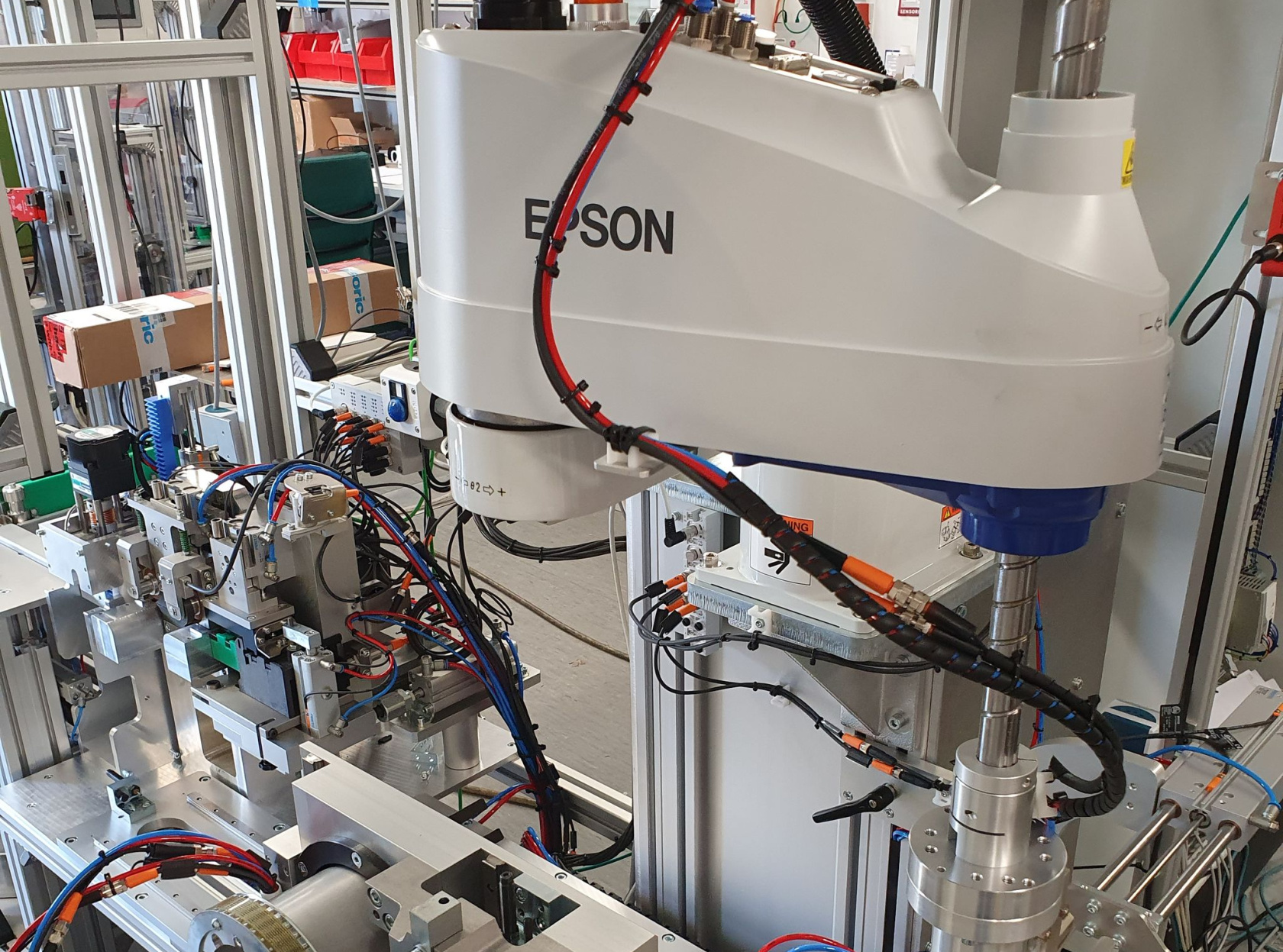
Are you planning a new plant or would you like to automate an existing process? Whether it's special-purpose machinery, plant engineering, or targeted automation solutions: We develop a solution that fits your requirements, interfaces, and target values – transparently, structurally, and with a clear focus on cost-effectiveness.
Use the contact form for a non-binding inquiry. Briefly describe your task, and we will get back to you promptly to discuss how we can sustainably improve your production with a customized machine.


Your questions answered quickly
Here you will find answers to the most important questions.
What tolerances can be achieved in precision manufacturing?
Achievable tolerances depend heavily on the material, component geometry, clamping concept, and machining strategy. In precision engineering, tolerances in the single-digit micrometer range are possible with the right setup; for complex shapes or thin-walled geometries, they are usually correspondingly larger. Crucially, a manufacturing-ready drawing (reference systems, form and position tolerances) and a coordinated measurement and inspection plan are essential. We determine the achievable accuracy in advance based on function, measurability, and process capability.
Which CNC processes and modern manufacturing methods are typically used?
Depending on the component requirements, CNC turning, CNC milling (up to multi-axis machining), and combined turning/milling centers are used for precision components. For tight fits and defined surfaces, reaming, honing, or grinding processes are used additionally if they offer greater process reliability than purely machining. The selection is based on functional surfaces, tolerances, surface finish requirements, and economical production volume. The goal is a stable process with reproducible results, not "maximum complexity" machining.
How is quality ensured and how are the components tested?
Quality assurance begins with drawing verification (tolerances, references, measurability) and continues through documented process steps to final inspection. Depending on the characteristic, measuring instruments such as micrometers, dial gauges, contour measuring devices, or coordinate measuring machines are used. Critical dimensions and form/position features are verified according to the inspection plan; measurement reports (e.g., initial article inspection) and traceable documentation are available upon request. For serial components, process capability is ensured through sampling, SPC, or defined inspection intervals.
Which materials can be processed – including special materials?
Common metals (e.g., aluminum, steel, stainless steel, brass) as well as engineering plastics (e.g., POM, PA, PEEK) and selected special materials can be machined. Material selection and heat treatment influence dimensional accuracy, distortion, and tool wear; therefore, the manufacturing concept is tailored accordingly. For materials that are difficult to machine, adapted cutting data, tool geometries, cooling/lubrication, and stable stresses are crucial. Upon request, we provide support in material-appropriate design with regard to function, corrosion, wear, and manufacturability.
How does the process from prototypes to series production work – and what data is needed for this?
For fast and reliable implementation, a 3D model (STEP), a dimensioned drawing with tolerances/references, and information on material, surface finish, and quantity are recommended. Prototypes are manufactured with consideration for future series production (clamping concept, tool accessibility, measurable features). Before series production begins, critical features and inspection criteria are defined and, if necessary, verified through a first article inspection. This allows for the early detection of changes and facilitates a planned transition to stable series production processes.
Overview:
- What tolerances can be achieved in precision manufacturing?
- Which CNC processes and modern manufacturing methods are typically used?
- How is quality ensured and how are the components tested?
- Which materials can be processed – including special materials?
- How does the process from prototypes to series production work – and what data is needed for this?
The Team
Here you can find our team members.

Jens Collin
Management

Thomas Tepp
Operations Manager & Authorized Signatory

Kai Marquardt
Project Management

Michel Meinhardt
Design Management

Torben Schubert
Assembly Management

Andree Meißner
Quality Assurance

Arne Becker
Work Preparation

Robin Hordan
Production / CAM Specialist

Peter Hubrecht
Automation
Our process chain at a glance
Here you will find our process chain

Customer inquiry

Quotation Review & Cost Estimation

New orders

Work Planning (WP)

Manufacturing

Quality Assurance

Post-processing & Third-Party Services

Shipping & Logistics

Billing

Follow-up & Improvement