


Flexible CNC machining
of small batch sizes
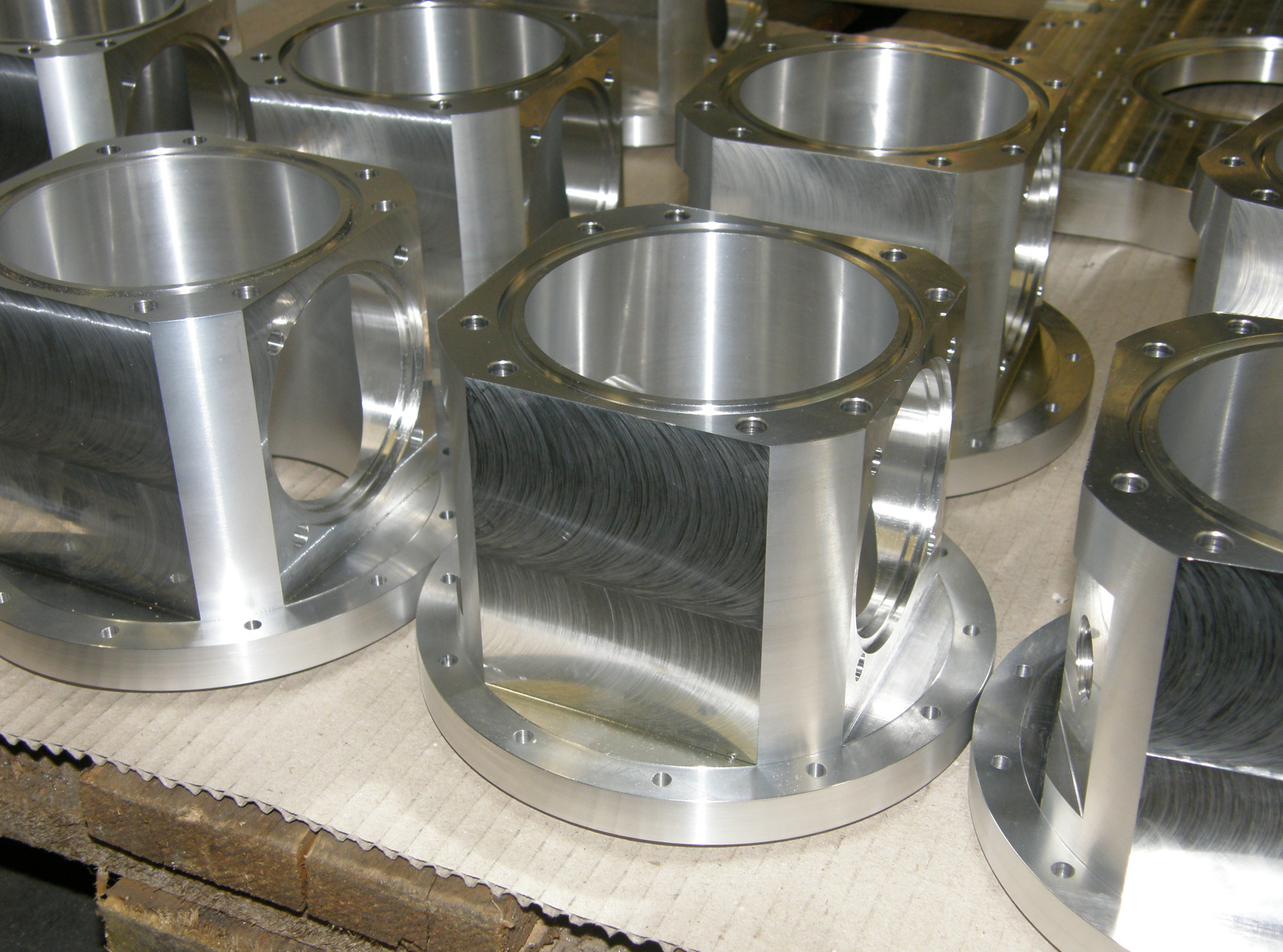
Keller Feinwerktechnik handles small-batch production for mechanical engineering when components are needed in small quantities, reliably, dimensionally accurate, and on schedule. CNC machining of small batches is particularly suitable for prototypes, pre-production series, and near-production small series where geometry, function, and repeatability are paramount. Modern CNC small-batch production combines short response times with stable processes, ensuring that changes from development and design are transferred to manufacturing in a controlled manner. As a CNC contract manufacturer, turned and milled parts are machined from common engineering materials as well as demanding materials with reliable processes.
Small-batch production in industrial environments demands an economical design of setup times, batch sizes, and production sequences, without compromising tolerances. CNC manufacturing of small batches supports scaling from individual parts to series production through reproducible programs, standardized tools, and controlled cutting data. For assemblies and functionally critical components, surfaces, fits, and threads are manufactured and inspected according to drawings and specifications. This results in small-batch production that combines flexibility and precision, reliably supporting development projects as well as series production in mechanical engineering.
An Overview of Our Services












Request a free consultation now – we'll provide you with practical advice.
Are you planning a new plant or would you like to automate an existing process? Whether it's special-purpose machinery, plant engineering, or targeted automation solutions: We develop a solution that fits your requirements, interfaces, and target values – transparently, structurally, and with a clear focus on cost-effectiveness.
Use the contact form for a non-binding inquiry. Briefly describe your task, and we will get back to you promptly to discuss how we can sustainably improve your production with a customized machine.


Your questions answered quickly
Here you will find answers to the most important questions.
What is meant by small-batch production and when is it worthwhile?
Small-batch production means the precise manufacturing of identical components in small quantities on CNC turning and milling centers. It is worthwhile when the prototype phase and series production launch need to be bridged, spare parts are required at short notice, or variants are created that are too small for mass production. CNC small-batch production offers series quality, reproducible tolerances, and documentable processes without the high start-up costs of traditional mass production. It is particularly attractive for technical buyers and designers because modifications to the component often remain economically feasible.
What quantities are considered a small series, and how flexible are repeat orders?
Depending on the industry and component complexity, small production runs typically range from about 10 to 500 pieces, sometimes even more if no special tooling is required. The advantage of CNC manufacturing small batches is that batch sizes can be staggered (e.g., 20 + 50 + 100 pieces) to balance demand, storage costs, and technical changes. Reordering is usually straightforward if CAD data, inspection criteria, and clamping concepts are defined. This allows development engineers to benefit from predictable quality and purchasing managers from short lead times.
Which materials are particularly suitable for CNC manufacturing of small quantities?
Many standard materials are suitable for CNC manufacturing of small batches because no specific tooling is required. Commonly used materials include aluminum (e.g., AlMgSi), steel and stainless steel (e.g., 1.4301/1.4571), as well as engineering plastics such as POM, PA, or PE. Material selection depends on function, load, corrosion requirements, and machinability. In small-batch mechanical engineering, it is also relevant whether surface treatments (anodizing, blackening, galvanizing) or defined surface roughness are required. Early coordination regarding tolerances and heat treatment avoids additional costs later.
How are the costs of a small production run structured, and how can it be made economically viable?
The costs of a small CNC production run typically consist of setup and programming effort, materials, machining time, tool wear, testing, and potentially surface finishing and logistics. Small-batch CNC production becomes economical when components are designed for manufacturability: sensible tolerances, reduced clamping, standardized radii/bores, and easily accessible machining surfaces reduce lead times and scrap. A smart batch size strategy also helps: initially a small quantity for functional validation, then a staggered increase. This allows buyers to keep budgets under control without increasing technical risks.
What is the difference between prototypes, small series production and large series production in mechanical engineering?
A prototype is usually a single part or a very small batch used for functional and assembly testing; changes are frequent and documentation is often more concise. In contrast, CNC small-batch production aims for repeatable quality across several dozen to a few hundred parts, including stable processes, defined test plans, and reproducible results. Series production typically relies on high volumes, optimized cycle times, and often specialized tooling or automation, which entails higher start-up costs. For applications in mechanical engineering, such as assemblies, fixtures, special-purpose machines, or spare parts, small-batch production bridges the gap between development and series production.
Overview:
- What is meant by small-batch production and when is it worthwhile?
- What quantities are considered a small series, and how flexible are repeat orders?
- Which materials are particularly suitable for CNC manufacturing of small quantities?
- How are the costs of a small production run structured, and how can it be made economically viable?
- What is the difference between prototypes, small series production and large series production in mechanical engineering?
The Team
Here you can find our team members.

Jens Collin
Management

Thomas Tepp
Operations Manager & Authorized Signatory

Kai Marquardt
Project Management

Michel Meinhardt
Design Management

Torben Schubert
Assembly Management

Andree Meißner
Quality Assurance

Arne Becker
Work Preparation

Robin Hordan
Production / CAM Specialist

Peter Hubrecht
Automation
Our process chain at a glance
Here you will find our process chain

Customer inquiry

Quotation Review & Cost Estimation

New orders

Work Planning (WP)

Manufacturing

Quality Assurance

Post-processing & Third-Party Services

Shipping & Logistics

Billing

Follow-up & Improvement